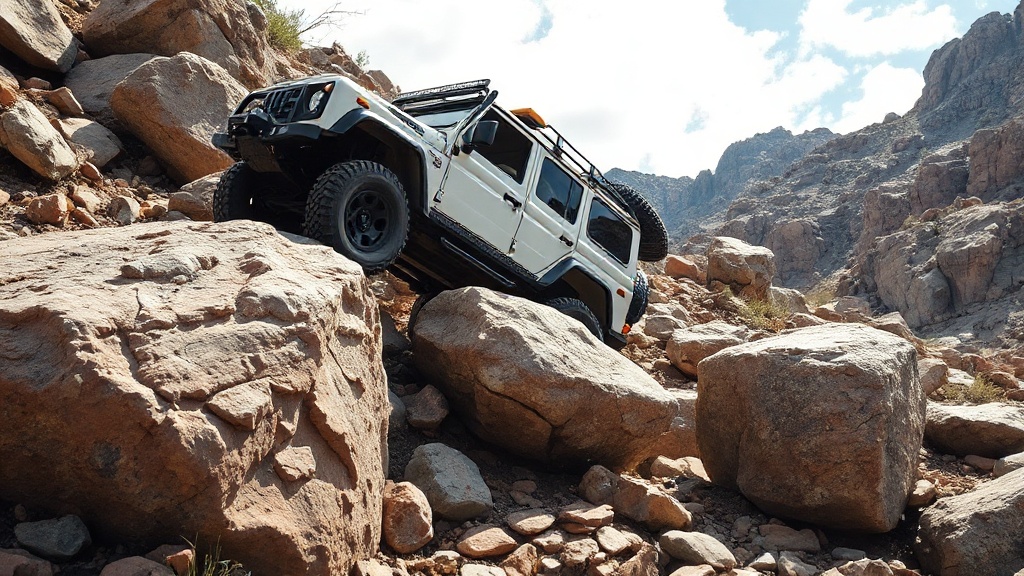
The people who pay to ride with you are, statistically, the most likely source of an injury claim against your Jeep tour business. They climb in and out of lifted vehicles, get jostled over rocks, breathe trail dust, and occasionally experience the very thing they came for — a rollover or a sudden stop on technical terrain. Understanding how to protect both your guests and your business from these inevitable bumps is one of the most important things you'll do as an operator.
This article breaks down the participant injury exposure, why general liability often won't help, how participant accident coverage works, and why the waiver you have everyone sign is not a substitute for insurance.
The Passenger and Rider Injury Exposure
Off-road tours produce a predictable set of injuries, and they happen even to careful operators:
- Rollovers and tip-overs on off-camber or steep terrain
- Trail jolts causing whiplash, back strain, or wrist and shoulder injuries
- Getting in and out of lifted Jeeps — sprained ankles, falls from running boards
- Dust and debris causing eye injuries or aggravating respiratory conditions
- Loose gear or recovery equipment striking a passenger
- Heat, dehydration, and altitude on long desert or mountain runs
Most of these are minor. But "minor" still means an emergency room visit, an ambulance bill, or a guest who decides their medical costs are your responsibility. A single moderate injury can turn into a lawsuit that consumes months of your time and far more money than the tour ever earned.
Why General Liability Has Participant Exclusions
New operators are often shocked to learn that their general liability policy may not cover the riders on their tour. Many GL policies — especially in adventure, sports, and recreation classes — contain a participant legal liability exclusion. The logic from the insurer's side is straightforward: participants voluntarily engage in an inherently risky activity, and that risk is fundamentally different from the everyday third-party exposure GL was designed to cover.
The practical result is a dangerous gap. Your GL might pay if a passerby is hurt at your staging area, yet deny the claim when your paying customer is injured on the trail. Without a coverage built specifically for participants, you are personally and financially exposed to the exact people you spend all day with.
How Participant Accident Medical Coverage Works
Participant accident medical coverage is purpose-built to close that gap. It provides medical benefits to a participant injured during your covered activity, and it does so on a no-fault basis — meaning the injured guest does not have to prove you did anything wrong to receive benefits.
Key features operators should understand:
- Defined medical benefit limit per participant, per incident (common limits run from $10,000 to $50,000 or more)
- Primary or excess to the guest's own health insurance, depending on the policy
- Deductible that may apply per claim
- Coverage triggered by the activity, not by a finding of negligence
Because it pays quickly and without a fault fight, participant accident coverage does something powerful: it satisfies an injured guest's immediate medical needs, which dramatically reduces the chance they hire a lawyer and pursue a liability lawsuit against you. It protects your customer and your balance sheet at the same time.
Why a Signed Waiver Is Not Insurance
Every reputable Jeep tour operator uses a liability waiver and release. You should too. But understand what a waiver is and what it is not.
A waiver is a legal document that can help defend you in court by showing the participant acknowledged the risks and agreed not to hold you liable for ordinary negligence. A waiver is not a source of money. It does not pay a medical bill. It does not fund a legal defense. And its enforceability varies dramatically by state — some courts uphold them strongly, others throw them out, and almost none enforce a waiver against gross negligence or against an injured minor.
In other words:
- A waiver may reduce the chance you lose a lawsuit.
- Insurance pays the medical bills, the defense costs, and any judgment that does get through.
You need both. A waiver without insurance leaves you defended on paper but broke in practice. Insurance without a waiver leaves you paying claims you could have deterred.
Releases Plus Coverage: The Right Combination
The strongest risk posture for a Jeep tour operator combines layered tools:
- A well-drafted, state-appropriate waiver and release signed by every participant before the activity, ideally reviewed by counsel in your state
- Participant accident medical coverage to handle injuries on a no-fault basis
- General liability for third-party and operational claims
- Documented safety briefings so every guest hears the risks and rules before departure
- Incident reporting procedures so any injury is recorded accurately and immediately
Together, these turn the unavoidable reality of trail injuries into a managed, insured risk rather than a business-ending event.
Protect Your Riders and Your Business
If your current program relies on a waiver alone — or if you've never confirmed whether your GL excludes participants — now is the time to find out. The gap is easy to close, and the peace of mind is worth far more than the premium.
Contractors Choice Agency writes participant accident and tour operator liability coverage in all 50 states. Call 844-967-5247 or request a quote through our online form, and we'll make sure your riders and your business are both covered before the next tour heads out.